.jpg)
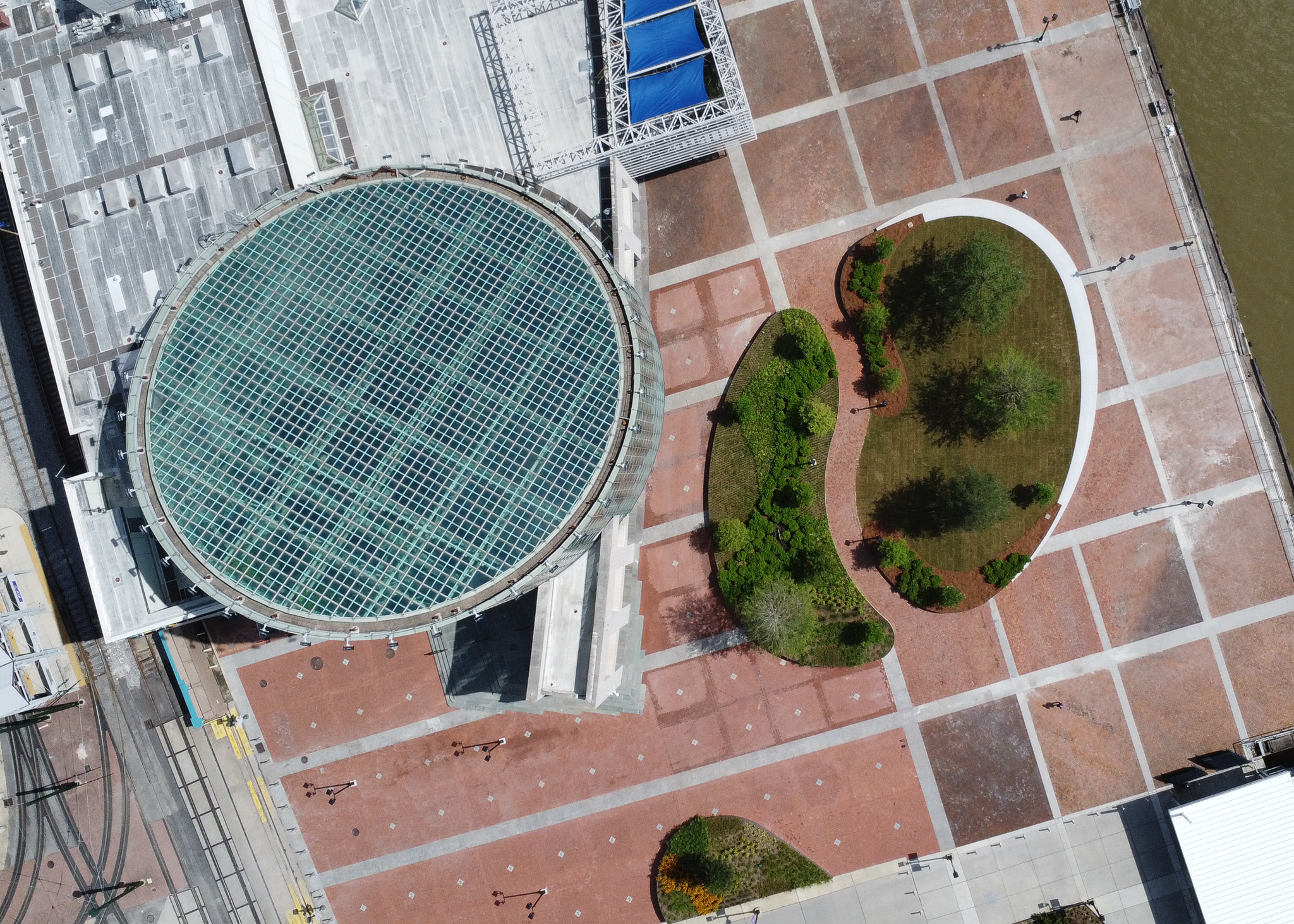
Woldenberg Park sits along one of New Orleans’ most visible stretches of riverfront, adjacent to the Audubon Aquarium and Insectarium. The project focused on converting an underused wharf into a planted public space that supports daily use, improves circulation, and strengthens the connection between the French Quarter and the Mississippi River.
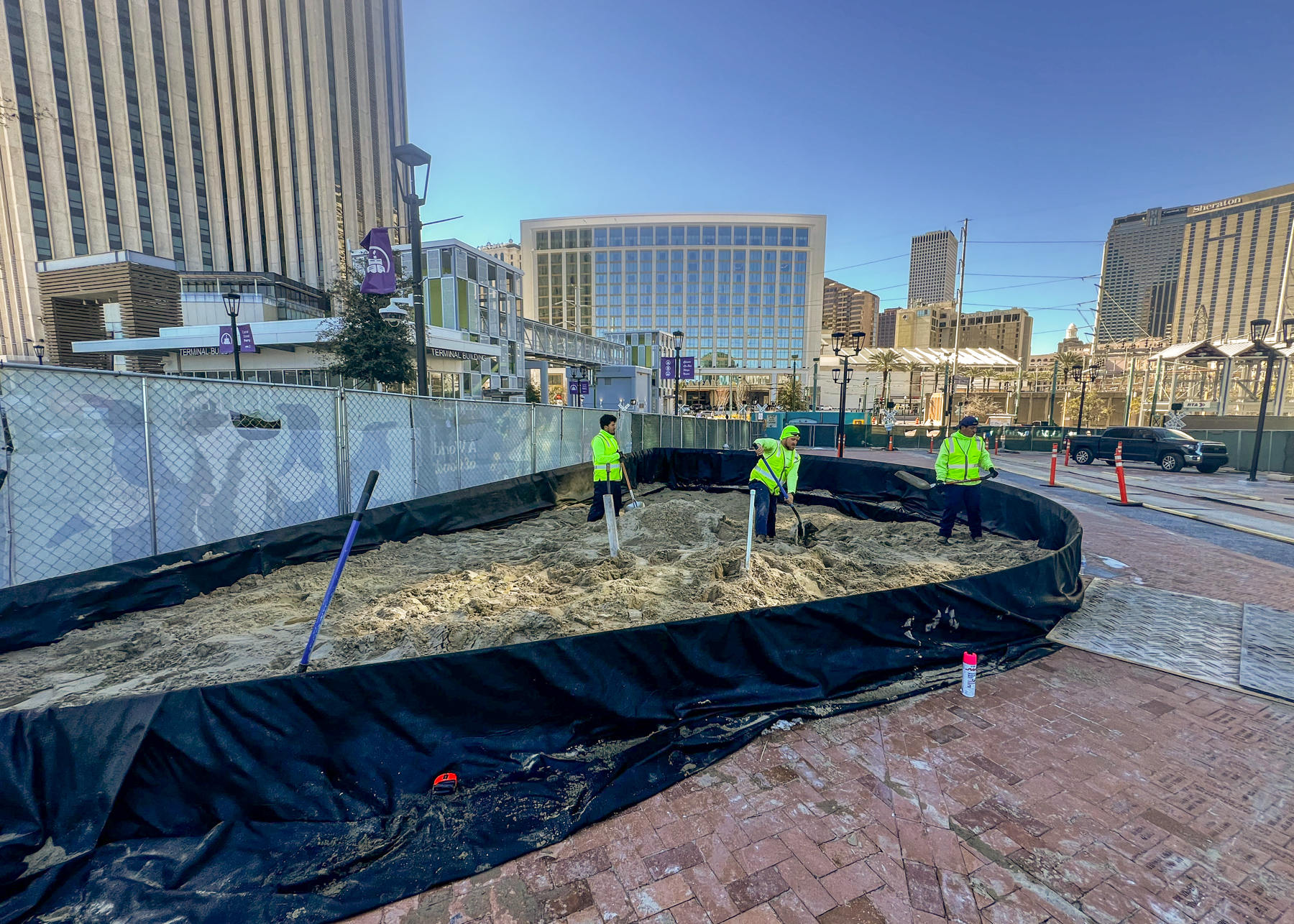
The site introduced a set of constraints uncommon in typical landscape construction. The project was built on an active wharf deck with strict load limits, restricting the use of cranes and heavy equipment. The work took place in a dense, high-traffic public setting. The aquarium remained open throughout construction, requiring careful staging, coordination with adjacent stakeholders, and continuous attention to pedestrian safety. The design also called for large-caliber Live Oak trees, 30 to 40 feet tall, which typically require significant lifting capacity and space for installation.
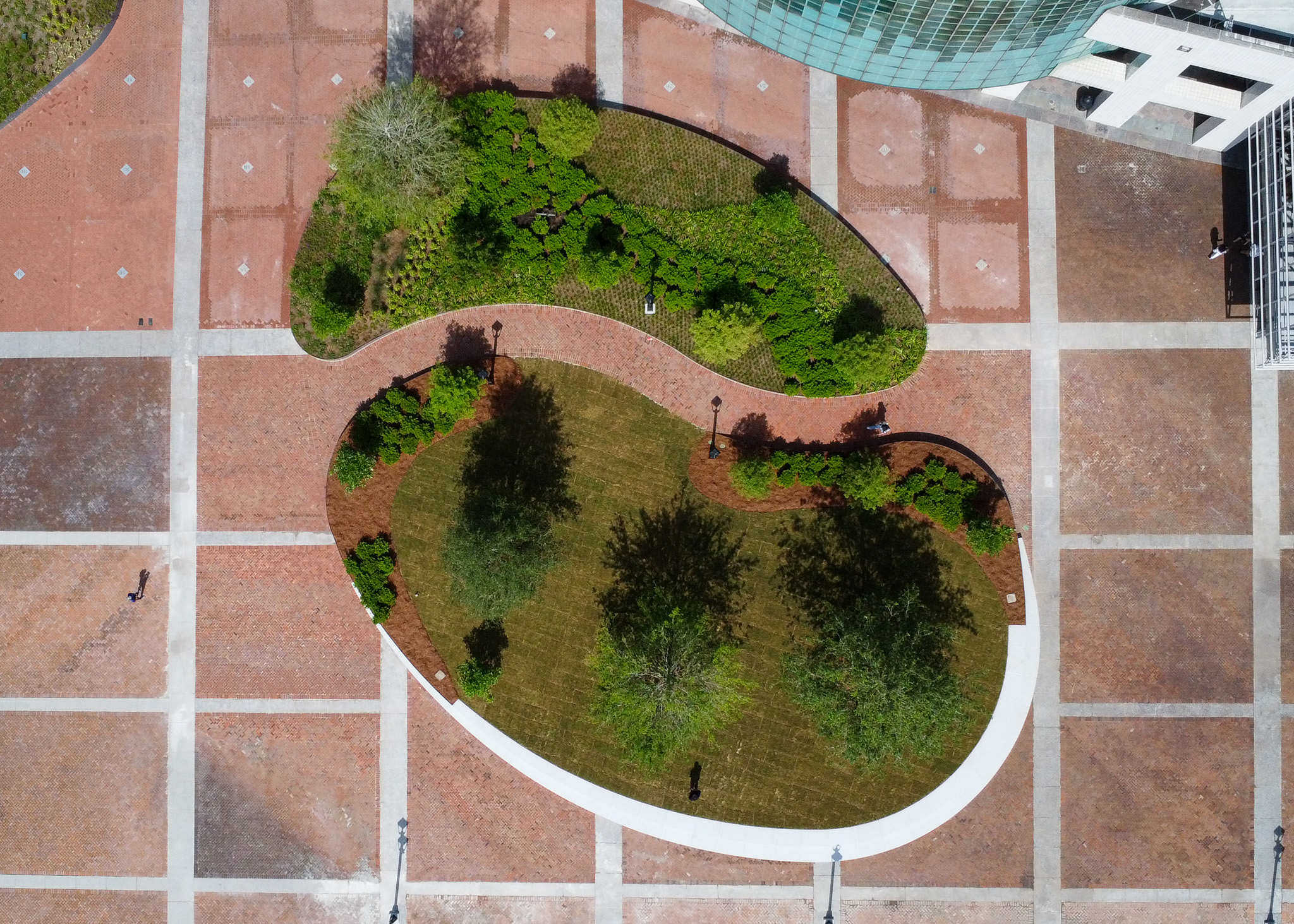
To meet these constraints, the team rethought the construction sequence. Rather than building planters first, trees were placed using a lull before surrounding structures were installed. Steel planter walls were then constructed around the trees, allowing the design intent to remain intact without exceeding load restrictions. This sequencing required close coordination across trades and precise timing on site. Daily planning addressed access, material staging, and installation order to keep work progressing within a confined footprint. Planting followed a layered layout designed to echo the movement of the Mississippi River, with thousands of individual plants installed by hand. Species were selected for durability in a riverfront environment and to support long-term performance with minimal irrigation demand.
The full scope included soil placement, grading, irrigation systems, sod installation, and planting of both ornamental and structural elements. Large tree installation was integrated into the sequence early, setting the framework for the surrounding landscape. Work was phased to maintain public access and minimize disruption. Equipment, plant material, and crews were staged within tight boundaries, often alongside active pedestrian routes and ongoing operations at the aquarium. Despite these conditions, the project was completed on schedule and without safety incidents, reflecting disciplined site management and consistent oversight.
.jpg)
.jpg)

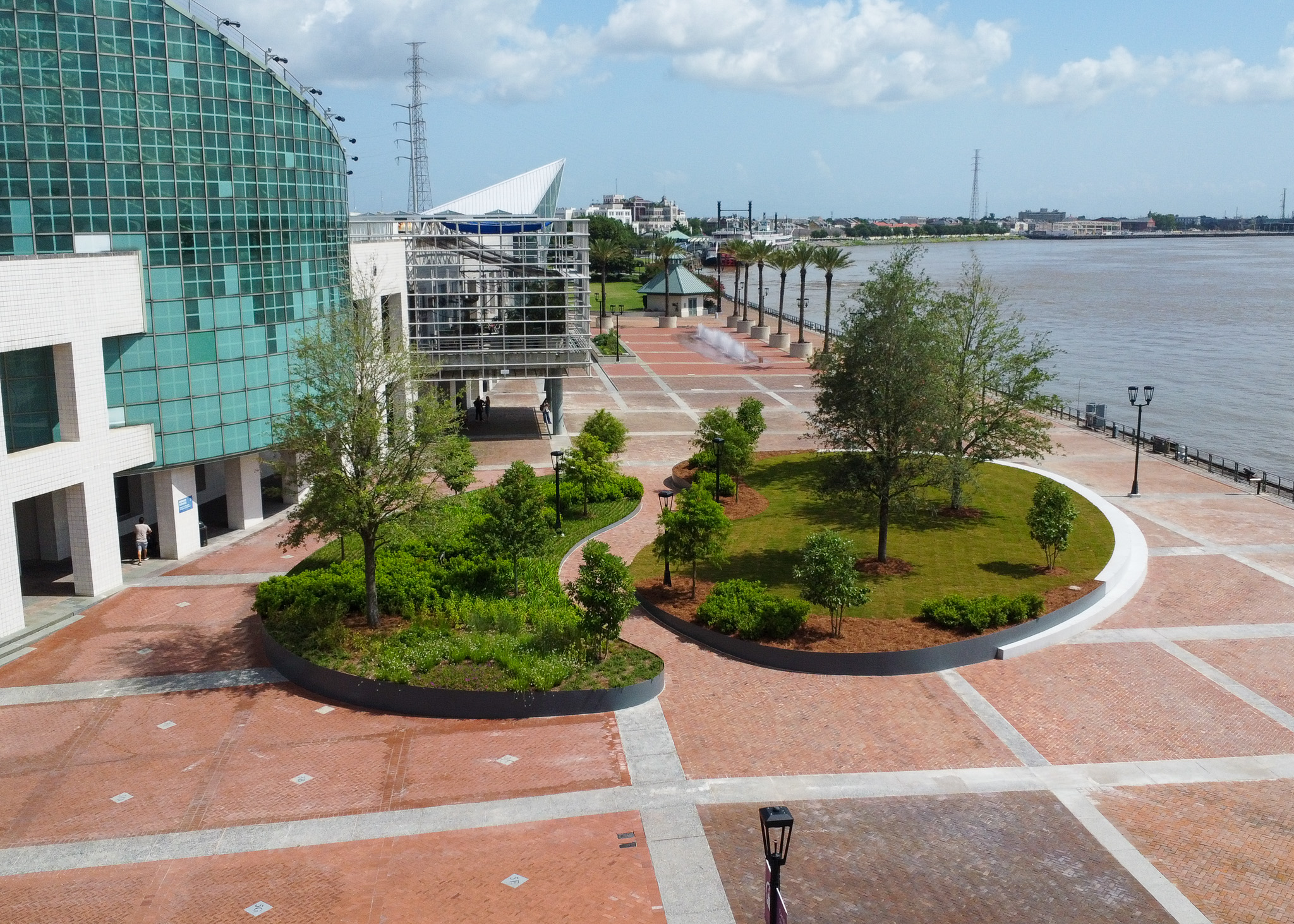
The completed landscape introduces shade, planting, and seating opportunities to a previously hard, underutilized surface. Curved beds guide movement through the site while framing views of the river and adjacent buildings.
The addition of trees and raised planting areas contributes to stormwater absorption and reduces heat along the riverfront edge.
Since reopening, the park has become an active public space, supporting both daily use and tourism. It also serves as a key entry point to the Audubon campus and a visible component of the city’s broader riverfront improvements.